The incredible Marco Bovi rounds out the collection with this, the sixth and final story, to be completed for the upcoming BLOODSHOT WORLD.
Five stories have been created:
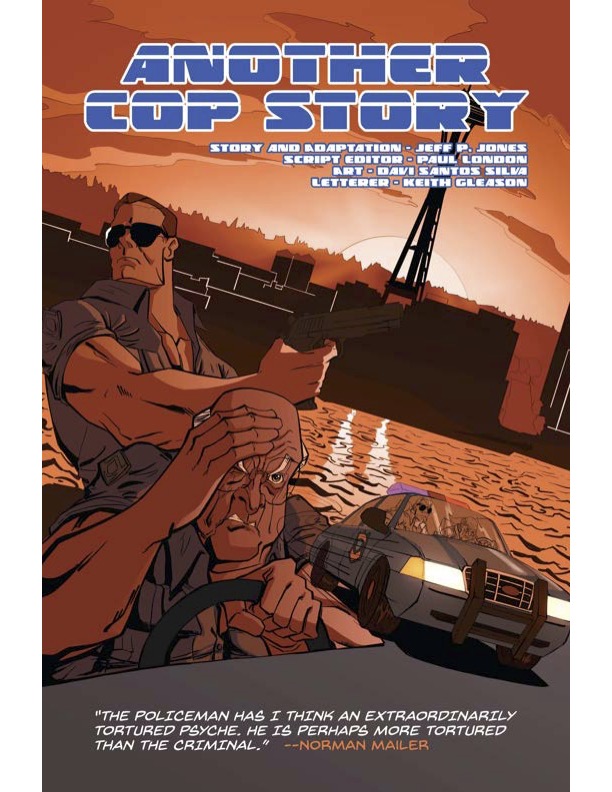
Another Cop Story (32 pages)
Night Deliveries (12 pages)
As You Are Now (18 pages)
Cri De Coeur (2 pages)
Tribute (13 pages)
77 pages total. Moving into this stage finally at long last...


There's a purity to comics scriptwriting, and I love it. Everything goes to serve the visuals. It's so different from prose writing, and yet prose writing, especially the writing of scenes, contains plenty of crossover techniques. Here are three aspects of comics scriptwriting that I'm finding pleasurable:


As a child of the 80s, it still amazes me how quickly our world gets cataloged for the eyes, and that there are all these folks out there continually uploading images of rusted-out trailers, green hallways of corn, military uniforms from every era and branch of service, archived photos of Ventura Boulevard in the 1940s.
In the pre-internet Before Times, to find such visual specificity for even a single useful reference image would take hours (walk to the library, find a computer terminal, scratch out the call number, begin the hunt through the book stacks--not that I don't LOVE this process, of course). Even given a whole day in the library doing analog research, you could never turn up the plethora delivered in less than a second by a simple google search.
The application for comics scripting? Reference images. The scriptwriter speaking to the artist visually.
Reference images have the added benefit of making the script itself more efficient. You can spend a precious paragraph describing the exterior of a house as you imagine it, or you can simply write, "See reference image," find a house on google images that's close to the one you picture, and attach it.
So far I'm keeping a separate "Images" file for each script. Below are some of the reference images for Tribute. The full reference file for that story, a comic of thirteen pages, is fifteen pages, with one to two images per page.
I'm still refining how the search for reference images gets incorporated into the process of scriptwriting. Even though the search itself is nearly instantaneous, poring through the numerous results, refining the search, delving down through the various pages to find that perfect single image, can be tedious.
It can also be a terrible distraction. Often I'll just make a note to find the actual image later and keep typing.
And noticing this just now--looking at the images separately from the script but in sequence, they still tell the story in their own way.
It's like reading only the final word on each line of a poem--you still get a flavor of what the poem's about.
And a final note--artists are grateful for reference images. It simply saves them time. Who wouldn't be grateful for that?


Though I had sent No Flying No Tights a copy of Bloodshot World , I hadn't heard from them, so I expected nothing. But when I checked, ...